
In today's modern industrial world, which is made up of metal bones, from towering skyscrapers and high-speed trains, to delicate electronic devices in our hands and smart home appliances, the form of metal is everywhere. And transforming these cold metal sheets into precision components with various shapes and functions is the key role played by sheet metal fabrication - a manufacturing core that combines traditional techniques with modern high technology. It is not only the fundamental process of manufacturing, but also the bridge that transforms innovative designs into real products.
1、 What is sheet metal processing?
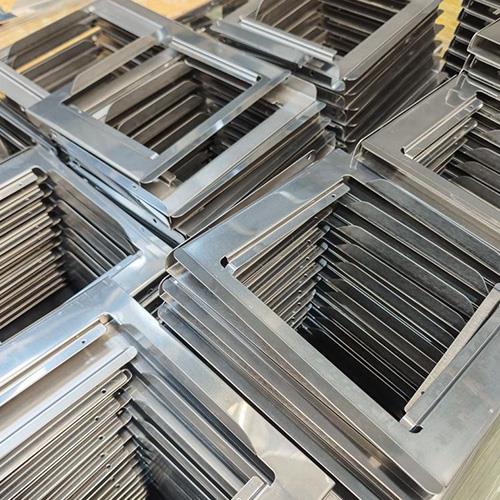
Sheet metal fabrication, as the name suggests, is a comprehensive cold working process for metal sheets (usually with a thickness of less than 6 millimeters). Its core lies in changing the physical form of metal sheets through techniques such as cutting, bending, stamping, welding, and splicing, rather than their material properties, to ultimately produce parts or products that meet design requirements. Compared with hot working methods such as casting and forging, sheet metal processing has significant advantages such as high material utilization, short production cycle, light weight, good strength, and relatively controllable cost, making it an indispensable manufacturing method in modern industry, especially in aerospace, automotive manufacturing, communication electronics, medical equipment, power energy and other fields.
2、 Core process flow: Transformation from drawings to finished products
A complete sheet metal fabrication process is a rigorous and smooth technical chain, which mainly includes the following key links:
Design and Programming: Everything begins with precise design. Engineers use CAD (Computer Aided Design) software to create 3D models and 2D engineering drawings of products, detailing all dimensions, tolerances, and technical requirements. Subsequently, through CAM (Computer Aided Manufacturing) software, the design data is converted into machining codes (G-codes) that can be recognized by CNC machine tools such as laser cutting machines and punch presses, laying the foundation for automated production.
Cutting: This is the first step in processing, which is to obtain the desired shape of the blank from the entire sheet. Traditional methods include shearing machines, while modern mainstream methods use high-precision CNC laser cutting, CNC plasma cutting, or CNC punching machines. Among them, fiber laser cutting has become a benchmark technology for precision sheet metal cutting due to its extremely high precision, narrow cutting gap, small heat affected zone, and ability to handle complex shapes.
Forming processing: a key step in endowing a flat plate with a three-dimensional shape. The main method is bending. The CNC bending machine precisely controls the movement of the upper mold (tool) and lower mold (V-groove) to apply pressure to the sheet metal, causing permanent plastic deformation and forming various angles of bending. Complex shapes may also require processes such as rolling, stretching, and stamping.
Connection and combination: Combine multiple sheet metal parts into a complete component. Welding (such as argon arc welding, laser welding, resistance spot welding) is the strongest connection method; Riveting is suitable for scenarios where non weldable materials or easy disassembly are required; And screw fastening, snap connections, etc. provide flexibility in assembly. Laser welding is highly favored in modern high-precision products due to its small deformation and high degree of automation.
Post treatment and surface treatment: Processed parts usually require a series of post treatments to improve quality. Including removing burrs, polishing welds, correcting deformations, etc. Surface treatment aims to enhance aesthetics, corrosion resistance, and wear resistance. Common processes include electroplating (galvanizing, chrome plating), powder coating (electrostatic powder coating), spray painting, anodizing (for aluminum materials), screen printing, etc.
3、 Technological Frontiers and Future Trends
With the deepening of "Industry 4.0" and "Made in China 2025", sheet metal fabrication is rapidly evolving towards intelligence, flexibility, and green direction:
Intelligent Manufacturing and Automation: The integration of automated production lines, robot loading and unloading and welding, and intelligent warehouse logistics systems (AGV) greatly improves production efficiency and consistency, reducing labor costs and errors.
Digitization and Informationization: The application of MES (Manufacturing Execution System) enables the full process digital management from order to delivery, real-time monitoring of production status, optimization of scheduling, and achieving transparent and traceable production.
Process integration and innovation: 3D laser cutting (capable of fine processing of three-dimensional components), linkage between bending centers and automatic material warehouses, combination of additive manufacturing (3D printing) and sheet metal subtractive manufacturing, constantly expanding the boundaries of design and the potential of manufacturing.
Green manufacturing: Emphasize energy conservation and environmental protection, such as using higher energy efficiency lasers, optimizing sampling software to improve material utilization, using environmentally friendly coatings and processes, and reducing waste and pollution in the production process.


Copyright © 2026 Nishan Consulting Group All rights reserved

 CN
CN


 Whatsapp
 Phone
Phone E-mail
 Message